Welcome to our website

Lorem ipsum dolor sit amet, consectetur adipisicing elit, sed do eiusmod tempor incididunt ut labore et dolore magna aliqua. Ut enim ad minim veniam, quis nostrud exercitation ullamco laboris nisi ut aliquip ex ea commodo consequat.

Duis aute irure dolor in reprehenderit in voluptate velit esse cillum dolore eu fugiat nulla pariatur. Excepteur sint occaecat cupidatat non proident, sunt in culpa qui officia deserunt mollit anim id est laborum. ed ut perspiciatis unde omnis iste.

Monday, 1 February 2010

3 tips for small business development


by: Ryan Hough
We believe that there are 3 factors that drive the success of small businesses.


1) Acquiring start-up capital
2) Finding customers
3) Accounting for, budgeting and controlling sales and expenses


The following resources will help your small business achieve these success factors.

Acquiring Start-Up Capital


An adequate supply of capital is essential as many profitable businesses fail because they don’t have enough cash to pay their employees and suppliers. But what is an adequate supply of capital? The only way to tell is by doing a significant amount of research on your potential market and formally documenting this in a business plan. I’m sure you know that a business plan is a very important document that is crucial to convincing your banker to lend you money.


There are two ways to obtain a business plan.


1) Do it yourself by amending a business plan template, or
2) Hire a professional to do it for you.


Obviously obtain 1) will be a great deal cheaper.


Our research led to a website that has over 60 high quality and free business plan templates. We also found a directory that you can use to easily find a business plan writer in your city – where ever you live in the world.


Finding Customers


Finding customers is a difficult and expensive task for service business owners such as accountants, lawyers and plumbers. We believe that a cost effective marketing strategy for service business owners is to simply give all their personal contacts a few business cards.


Our research led to a few websites that have pre-designed business card templates. We felt that the diversity and quality of these designs was outstanding. In addition, we found that you can obtain a significant saving by finding a printing service on the Internet. We found that you could get 2,000 full color business cards for as little as US $150.


Accounting For, Budgeting and Controlling Revenue and Expenses


Accurate accounting is very important for small business owners. It’s essential that you have timely access to information that could make or break your business. If stocks are running low – you need to know about it. If a large proportion of your debtors haven’t paid – you need to know about it. If you do not react to these situations quickly you may have a situation where you don’t have enough money to pay your employees – or worse still someone is stealing cash out the till.


Our research led to a website that compares and reviews top accounting software for small businesses. The cheapest software cost US $89.99 and the most expensive software cost US $1,499. It was interesting to note that the top 3 ranked websites were not the most expensive and cost between US $250 - US $300.


Hopefully you now have an idea of some of the tools that you can use to grow and maintain your small business. If you would like to benefit from our research please visit our website. We do not charge for this research and offer the content freely on our website.


About the author:
http://www.best-quality-small-business-resources.com/

Ryan Hough is the webmaster of best quality small business resources.com, who's aim is to help you save time and money by finding reviews and case studies that will enable you to choose the best resources at the right price.

Tuesday, 26 January 2010

The Prokaryotes

Archaea and Bacteria

Welcome to the microscopic world of the Prokaryotes.
The smallest and most diverse group of organisms living on this planet.

Prokaryotes are the original inhabitants of this planet, the first successful today's would have looked very like some of today's Archaea. Both Archaea and Bacteria evolved somewhere between 3 or 4 billion years ago as far as we are able to tell from the fossil record. This means they have been around twice as long as the Protozoans and more than 3 times as long as animals.

Prokaryotes are the toughest of the tough when it come to living things. They hold all the records for living in the coldest, hottest, most acidic and most highly pressurized environments. They live in incredible places such as miles beneath the earth in bare rock, under glaciers, floating around in clouds and miles down on the sea floor at temperatures greater than 100 C. They are also the worlds experts at surviving bad times. In 2000AD scientists at West Chester University Pennsylvania succeeded in waking up the resting spores of a bacterium (Bacillus permians) that was last active 250 million years ago. The question this caused scientists to ask was. "Is it possible some Bacteria may be immortal ??"

Prokaryotes make up most of what is studies by microbiologists, the rest being some single celled fungi and algae. Microbiology is a very important field of research these days. Contributing greatly to our studies of medicine, bioengineering, genetics and evolution.

أعلى النموذج

أسفل النموذج

Prokaryotes are single celled organisms that do not have a nucleus, mitochondria or any other membrane bound organelles. In other words neither their DNA nor any other of their sites of metabolic activity are collected together in a discrete membrane enclosed area. Instead everything is openly accessible within the cell some free floating some bound to the walls of the cell membrane, it is this which separates them from the Eukaryotes. Some bacteria have internal membranes, invaginations of the cell membrane as sites of metabolic activity, these membranes do not enclose a separate area of the cytoplasm. For more on Prokaryote vs. Eukaryote cells see Cells.html

Prokaryotes come in two sorts, Archaea and Bacteria. Both of these are a Kingdoms of life in their own rite. this is because they are as different, if not more different, from each other, as they are from protozoans, fungi, plants and us. At the bottom of this page is a table listing most of the major differences between Archaea, Bacteria and Eukaryotes.

NOTE:- Nitrogen is an essential component of all protein and DNA molecules. However gaseous nitrogen, N2, cannot be used by most organisms. So even though there is plenty of nitrogen in the atmosphere, often not much of it is available for living things to use to grow. To build new proteins, etc., most organisms make use of nitrogen that is already part of a larger molecule, i.e. a dead plant or animal or animal waste products. Gaseous nitrogen is free nitrogen. So far as we know only prokaryotes, human chemists and the occasional blast of lightening can split the two atoms of nitrogen in gaseous nitrogen and cause them to be combined with one or more carbon or oxygen atoms. When a nitrogen atom is included in a molecule comprising other elements it is referred to as 'fixed' and organisms which can take gaseous nitrogen and incorporate it into such molecules are called 'nitrogen-fixers'. Nitrogen fixing organisms are very important to the balance of life on earth, without them Eukaryotes (Animals, Fungi and Plants) would be able to live and grow.

A Note on Measurement and its Terminology

All measurements made in the microscopic world are based on the metre, this is because the metre is the basic unit of all scientific measurements of length. If you are still thinking in imperial term (inches, feet and yards) a metre is about 39 inches or just over 1 yard.

The units of measurements for microscopic organisms are Micrometres, Nanometres and Ångstroms.
103 = a 1 with 3 '0's after it (i.e. 1000), 106 = a 1 with 6 '0's after it etc.

Metric Units of Measurement

Unit of Measurement

Number in 1 Metre

Number in 1 Inch

Centimetre

102

2.5

Millimetre

103

25

Micrometre

106

25 000

Nanometre

109

25 000 000

Ångstrom

1010

250 000 000

For Those Who Would Like to Know More

To find out more you will have to visit the following pages:-

The Archaea The Bacteria Prokaryotes in the News.

Table of differences between Archaea, Bacteria and Eukaryotes

Characteristic

Archaea

Bacteria

Eukaryotes

Predominantly multicellular

No

No

Yes

Cell contains a nucleus and other membrane bound organelles

No

No

Yes

DNA occurs in a circular form*

Yes

Yes

No

Ribosome size

70s

70s

80s

Membrane lipids ester-linked**

No

Yes

Yes

Photosynthesis with chlorophyll

No

Yes

Yes

Capable of growth at temperatures greater than 80 C

Yes

Yes

No

Histone proteins present in cell

Yes

No

Yes

Methionine used as tRNA Initiator***

Yes

No

Yes

Operons present in DNA

Yes

Yes

No

Interon present in most genes

No

No

Yes

Capping and poly-A tailing of mRNA

No

No

Yes

Gas vesicles present

Yes

Yes

No

Capable of Methanogenesis

Yes

No

No

Sensitive to chloramphenicol, kanamycin and streptomycin

No

Yes

No

Transcription factors required

No

Yes

Yes

Capable of Nitrification

No

Yes

No

Capable of Denitrification

Yes

Yes

No

Capable of Nitrogen Fixation

Yes

Yes

No

Capable of Chemolithotrophy

Yes

Yes

No

* Eukaryote DNA is linear

** Archaea membrane lipids are ether-linked

*** Bacteria use Formylmethionine

Tuesday, 29 September 2009

Thomas Alva Edison


In his lifetime, Thomas Alva Edison profoundly affected the technology of modern society. The American inventor was born February 11, 1847 in Milan, Ohio. He was the seventh and last child of Samuel Edison, Jr. and Nancy Elliot Edison. When Edison was 7 years old, his family moved to Port Huron, Michigan, after his father hired on as a carpenter at the Fort Gratiot military post.

Edison entered school in Port Huron, but his teachers considered him to be a dull student. Because of hearing problems, Edison had difficulty following the lessons and his school attendance became sporadic. Nevertheless, Edison became a voracious reader and at age 10, he set up a laboratory in his basement.

When his mother could not longer stand the smell of his chemistry lab, Edison took a job as a trainboy on the Grand Trunk Railway and established a new lab in an empty freight car. He was 12 at the time. Edison also began printing a weekly newspaper, which he called the Grand Trunk Herald.

While Edison was working for the railroad, something happened that changed the course of his career. Edison saved the life of a station official's child, who had fallen onto the tracks of an oncoming train. For his bravery, the boy's father taught Edison how to use the telegraph.

From 1862 to 1868, Edison worked as a roving telegrapher in the Midwest, the South, Canada, and New England. During this time, he began developing a telegraphic repeating instrument that made it possible to transmit messages automatically. By 1869, Edison's inventions, including the duplex telegraph and message printer, were progressing so well, he left telegraphy and began a career of full-time inventing and entrepreneurship.

Edison moved to New York City and within a year, he was able to open a workshop in Newark, New Jersey. He produced the Edison Universal Stock Printer, the automatic telegraph, the quadruplex, as well as other printing telegraphs, while working out of Newark. During this same period, Edison married Mary Stilwell.

Edison was a poor financial manager and by 1875, he began to experience financial difficulties. To reduce costs, Edison asked his widowed father to help him build a new laboratory and machine shop in Menlo Park, New Jersey. He moved into the new building in March, 1876 along with two associates, Charles Batchelor and John Kruesi. Edison achieved his greatest successes in this laboratory and he was dubbed the "Wizard of Menlo Park."

In 1877, Edison invented the carbon-button transmitter that is still used in telephone speakers and microphones. In December of the same year, he unveiled the tinfoil phonograph. (It was 10 years before the phonograph was available as a commercial product). In the late 1870s, backed by leading financiers including J.P. Morgan and the Vanderbilts, Edison established the Edison Electric Light Company. In 1879, he publicly demonstrated his incandescent electric light bulb. In 1882, he supervised the installation of the first commercial, central power system in lower Manhattan. In 1883, one of Edison's engineers William J. Hammer, made a discovery which later led to the electron tube. The discovery was patented the "Edison effect."

In 1884, Edison's wife Mary died, leaving him with three young children. He married Mina Miller in 1886, and began construction on a new laboratory and research facility in West Orange, New Jersey. The new lab employed approximately 60 workers and Edison attempted to personally manage this large staff. The story goes that when a new employee once asked about rules, Edison answered, "There ain't no rules around here. We're trying to accomplish something." However, the operation in West Orange lacked the intimacy of Menlo Park, and Edison's time was often consumed by administrative chores.

During his time in West Orange, Edison produced the commercial phonograph, the Kinetoscope, the Edison storage battery, the electric pen, the mimeograph, and the microtasimeter. In 1913, Edison introduced the first talking moving pictures. In 1915, he was appointed president of the U.S. Navy Consulting Board. In all, Edison patented more than 1,000 discoveries. Edison's inventions were often in response to demand for new or improved products. However, others also came about accidentally or serendipitously.

Thomas Alva Edison died in West Orange, New Jersey on October 18,1931. At the time of this death, he was experimenting on rubber from goldenrod. After his death, Edison became a folk hero of legendary status. His inventions had truly and profoundly affected the shaping of modern society.

Wednesday, 23 September 2009

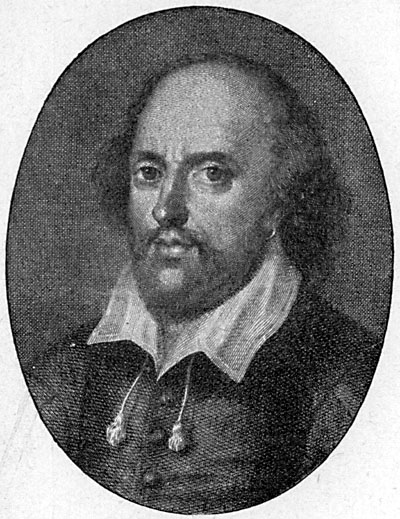
William Shakespeare


William Shakespeare


For all his fame and celebration, William Shakespeare remains a mysterious figure with regards to personal history. There are just two primary sources for information on the Bard: his works, and various legal and church documents that have survived from Elizabethan times. Naturally, there are many gaps in this body of information, which tells us little about Shakespeare the man.

William Shakespeare was born in Stratford-upon-Avon, allegedly on April 23, 1564. Church records from Holy Trinity Church indicate that he was baptized there on April 26, 1564. Young William was born of John Shakespeare, a glover and leather merchant, and Mary Arden, a landed heiress. William, according to the church register, was the third of eight children the Shakespeare household—three of whom died in childhood. John Shakespeare had a remarkable run of success as a merchant, and later as an alderman and high bailiff of Stratford, during William's early childhood. His fortunes declined, however, in the 1570s.

There is great conjecture about Shakespeare's childhood years, especially regarding his education. It is surmised by scholars that Shakespeare attended the free grammar school in Stratford, which at the time had a reputation to rival Eton. While there are no records extant to prove this claim, Shakespeare's knowledge of Latin and Classical Greek would tend to support this theory. In addition, Shakespeare's first biographer, Nicholas Rowe, wrote that John Shakespeare had placed William "for some time in a free school." John Shakespeare, as a Stratford official, would have been granted a waiver of tuition for his son. As the records do not exist, we do not know how long William attended the school, but certainly the literary quality of his works suggest a solid education. What is certain is that William Shakespeare never proceeded to university schooling, which has stirred some of the debate concerning the authorship of his works.

The next documented event in Shakespeare's life is his marriage to Anne Hathaway on November 28, 1582. William was 18 at the time, and Anne was 26—and pregnant. Their first daughter, Susanna, was born on May 26, 1583. The couple later had twins, Hamnet and Judith, born February 2, 1585 and christened at Holy Trinity. Hamnet died in childhood at the age of 11, on August 11, 1596.

For seven years, William Shakespeare effectively disappears from all records, turning up in London circa 1592. This has sparked as much controversy about Shakepeare's life as any period. Rowe notes that young Shakespeare was quite fond of poaching, and may have had to flee Stratford after an incident with Sir Thomas Lucy, whose lands he allegedly hunted. There is also rumor of Shakespeare working as an assistant schoolmaster in Lancashire for a time, though this is circumstantial at best. It is estimated that Shakespeare arrived in London around 1588 and began to establish himself as an actor and playwright. Evidently, Shakespeare garnered envy early on for his talent, as related by the critical attack of Robert Greene, a London playwright, in 1592: "...an upstart crow, beautified with our feathers, that with his Tiger's heart wrapped in a player's hide, supposes he is as well able to bombast out a blank verse as the best of you: and being an absolute Johannes fac totum, is in his own conceit the only Shake-scene in a country."

Greene's bombast notwithstanding, Shakespeare must have shown considerable promise. By 1594, he was not only acting and writing for the Lord Chamberlain's Men (called the King's Men after the ascension of James I in 1603), but was a managing partner in the operation as well. With Will Kempe, a master comedian, and Richard Burbage, a leading tragic actor of the day, the Lord Chamberlain's Men became a favorite London troupe, patronized by royalty and made popular by the theatre-going public. When the plague forced theatre closings in the mid-1590s, Shakespeare and his company made plans for the Globe Theatre in the Bankside district, which was across the river from London proper.

Shakespeare's success is apparent when studied against other playwrights of this age. His company was the most successful in London in his day. He had plays published and sold in octavo editions, or "penny-copies" to the more literate of his audiences. It is noted that never before had a playwright enjoyed sufficient acclaim to see his works published and sold as popular literature in the midst of his career. While Shakespeare could not be accounted wealthy, by London standards, his success allowed him to purchase New House and retire in comfort to Stratford in 1611.

William Shakespeare wrote his will in 1611, bequeathing his properties to his daughter Susanna (married in 1607 to Dr. John Hall). To his surviving daughter Judith, he left £300, and to his wife Anne left "my second best bed." William Shakespeare allegedly died on his birthday, April 23, 1616. This is probably more of a romantic myth than reality, but Shakespeare was interred at Holy Trinity in Stratford on April 25. In 1623, two working companions of Shakespeare from the Lord Chamberlain's Men, John Heminges and Henry Condell, printed the First Folio edition of the Collected Works, of which half the plays contained therein were previously unpublished. The First Folio also contained Shakespeare's sonnets.

William Shakespeare's legacy is a body of work that will never again be equaled in Western civilization. His words have endured for 400 years, and still reach across the centuries as powerfully as ever. Even in death, he leaves a final piece of verse as his epitaph:

Good friend, for Jesus' sake forbeare

To dig the dust enclosed here.

Blessed be the man that spares these stones,

And cursed be he that moves my bones.

Vicesimo Quinto die Januarii Martii Anno Regni Domini nostri Jacobi nucn Regis Angliae etc decimo quarto & Scotie xlixo Annoque Domini 1616

Testamentum

Willemi Shackspeare

Registretur

In the name of god Amen I William Shackspeare of Stratford upon Avon in the countrie of Warr' gent in perfect health and memorie god by praysed doe make and Ordayne this my last will and testament in manner and forme followeing that ys to saye first I Comend my Soule into the hands of god my Creator hoping and assuredlie beleeving through thonelie merittes of Jesus Christe my Saviour to be made partaker of lyfe everlastinge And my bodye to the Earthe whereof yt ys made.

Item I Gyve and bequeath unto my sonne in Law and Daughter Judyth One Hundred and fyftie pounds of lawfull English money to be paied unto her in manner and forme follewing That ys to saye One Hundred Poundes in discharge of her marriage porcion within one yeare after my deceas with consideracion after the Rate of twoe shillinges in the pound for soe long tyme as the same shalbe unpaid unto her after my deceas & the fyftie pounds Residewe therof upon her surrendering of or gyving of such sufficient securitie as the overseers of this my will shall like of to Surrender or graunte All her estate and Right that shall discend or come unto her after my deceas or that she nowe hath of in or to one Copiehold tenemente with theappertenances lyeing & being in Stratford upon Avon aforesaied in the saide countie of warr' being parcell or holden of the mannor of Rowington unto my daughter Susanna Hall and her heires for ever.

Item I gyve and bequeath unto my saied Daughter Judyth One Hundred and ffyftie Poundes more if shee or Anie issue of her bodie Lyvinge att thend of three yeares next ensueing the daie of the date of this my will during which tyme my executors to paie her consideracion from my deceas according to the Rate afore saied. And if she dye within the saied terme without issue of her bodye then my will ys and and I doe gyve and bequeath One Hundred Poundes therof to my Neece Eliabeth Hall and ffiftie Poundes to be sett fourth by my executors during the lief of my Sister Johane Harte and the use and proffitt therof cominge shalbe payed to my saied Sister Jone and after her deceas the saied L li shall Remaine Amongst the childredn of my saied Sister Equallie to be devided Amongst them. But if my saied daughter Judith be lyving att thend of the saeid three yeares or anie issue of her bodye then my will ys and soe I devise and bequeath the saied Hundred and ffyftie poundes to be sett out by my executors and overseers for the best benefit of her and her issue and the stock not to be paied unto her soe long as she shalbe marryed and Covert Baron by my executors and overseers but my will ys that she shall have the consideracion yearelie paied unto her during her lief and after her deceas the saied stock and condieracion to bee paid to her children if she have Anie and if not to her executors or Assignes she lyving the saied terme after my deceas provided that if such husbond as she shall att thend of the saied three yeares by marryed unto or attain after doe sufficiently Assure unto her and thissue of her bodie landes answereable to the portion gyven unto her and to be adjudged soe by my executors and overseers then my will ys that the saied CL li shalbe paied to such husbond as shall make such assurance to his owne use.

Item I gyve and bequeath unto my saied sister Jone XX li and all my wearing Apprell to be paied and delivered within one yeare after my deceas. And I doe will and devise unto her the house with thappurtenances in Stratford where in she dwelleth for her naturall lief under the yearelie Rent of xiid

Item I gyve and bequeath unto her three sonnes William Hart—Hart and Michaell Harte ffyve pounds A peece to be payed within one yeare after my decease to be sett out for her within one yeare after my deceas by my executors with thadvise and direccons of my overseers for her best proffitt untill her marriage and then the same with the increase thereof to be paied unto her.

Item I gyve and bequath unto her the said Elizabeth Hall All my Plate (except my brod silver and gilt bole) that I now have att the date of this my will.

Item I gyve and bequeath unto the Poore of Stratford aforesaied tenn poundes; to Mr Thomas Combe my Sword; to Thomas Russell Esquier ffyve poundes and to ffrauncis collins of the Borough of Warr' in the countie of Warr' gent. thriteene poundes Sixe shillinges and Eight pence to be paied within one yeare after my deceas.

Item I gyve and bequeath to mr richard Hamlett Sadler Tyler thelder XXVIs VIIId to buy him A Ringe; to William Raynoldes gent XXVIs VIIId to buy him a Ringe; to my godson William Walker XXVIs VIIId in gold and to my ffellowes John Hemynges, Richard Burbage and Heny Cundell XXVIs VIIId A peece to buy them Ringes.

Item I Gyve Will Bequeth and Devise unto my Daughter Susanna Hall for better enabling of her to performe this my will and towardes the performans thereof All that Capitall Messuage or tenemente with thappertenaces in Stratford aforesaid called the newe plase wherein I now Dwell and two messuags or tenementes with thappurtenances scituat lyeing and being in Henley Streete within the borough of Stratford aforesaied. And all my barnes, stables, Orchardes, gardens, landes, tenementes and herediaments whatsoever scituat lyeing and being or to be had receyved, perceyved or taken within the townes and Hamletts, villages, ffieldes and groundes of Stratford upon Avon, Oldstratford, Bushopton and Welcombe or in anie of them in the saied countie of warr And alsoe All that Messuage or tenemente with thappurtenances wherein one John Robinson dwelleth, scituat, lyeing and being in the blackfriers in London nere the Wardrobe and all other my landes tenementes and hereditamentes whatsoever. To Have and to hold All and singular the saied premisses with their Appurtenances unto the saied Susanna Hall for and during the terme of her naturall lief and after her deceas to the first sonne of her bodie lawfullie yssueing and to the heiries Males of the bodie of the saied Second Sonne lawfullie yssyeinge and for defalt of such heires Males of the bodie of the saied third sonne lawfullie yssye ing And for defalt of such issue the same soe to be Reamine to the ffourth sonne, ffythe, sixte and seaventh sonnes of her bodie lawfullie issueing one after Another and and to the heires Males of the bodies of the saied ffourth, ffythe, Sixte and Seaventh sonnes lawfullie yssueing in such mamer as yt ys before Lymitted to be and remaine to the first, second and third Sonns of her bodie and to their heires males. And for defalt of such issue the saied premisses to be and Remaine to my sayed Neede Hall and the heires Males of her bodie Lawfully yssueing for default of...such issue to my daughter Judith and the heires of me the saied William Sahckspere for ever.

Item I gyve unto my wief my second best bed with the furniture; Item I gyve and bequeath to my saied daughter Judith my broad silver gilt bole.

All the rest of my goodes Chattels, Leases, plate, jewles and Household stuffe whatsoever after my dettes and Legasies paied and my funerall expences discharged, I gyve devise and bequeath to my Sonne in Lawe John Hall gent and my daughter Susanna his wief whom I ordaine and make executors of this my Last will and testament. And I doe intreat and Appoint the saied Thomas Russell Esquier and ffrauncis Collins gent to be overseers herof And doe Revoke All former wills and publishe this to be my last will and testament. In witnes whereof I have hereunto put my Seale hand the Daie and Yeare first above Written.

Witness to the publishing hereof: Fra: Collyns, Juilyus Shawe, John Robinson, Hamnet Sadler, robert Whattcott.

Saturday, 4 July 2009

Florence Nightingale

Florence Nightingale, the daughter of the we

althy landowner, William Nightingale of Embly Park, Hampshire, was born in Florence, Italy, on 12th May, 1820. Her father was a Unitarian and a Whig who was involved in the anti-slavery movement. As a child, Florence was very close to her father, who, without a son, treated her as his friend and companion. He took responsibility for her education and taught her Greek, Latin, French, German, Italian, history, philosophy and mathematics.

At seventeen she felt herself to be called by God to some unnamed great cause. Florence's mother, Fanny Nightingale, also came from a staunch Unitarian family. Fanny was a domineering woman who was primarily concerned with finding her daughter a good husband. She was therefore upset by Florence's decision to reject Lord Houghton's offer of marriage. Florence refused to marry several suitors, and at the age of twenty-five told her parents she wanted to become a nurse. Her parents were totally opposed to the idea as nursing was associated with working class women.

Florence's desire to have a career in medicine was reinforced when she met Elizabeth Blackwell at St. Bartholomew's Hospital in London. Blackwell was the first woman to qualify as a doctor in the United States. Blackwell, who had to overcome considerable prejudice to achieve her ambition, encouraged her to keep trying and in 1851 Florence's father gave her permission to train as a nurse.

Florence, now thirty-one, went to Kaiserwerth, Germany where she studied to become a nurse at the Institute of Protestant Deaconesses. Two years later she was appointed resident lady superintendent of a hospital for invalid women in Harley Street, London.
In March, 1853, Russia invaded Turkey. Britain and France, concerned about the growing power of Russia, went to Turkey's aid. This conflict became known as the Crimean War. Soon after British soldiers arrived in Turkey, they began going down with cholera and malaria. Within a few weeks an estimated 8,000 men were suffering from these two diseases.
When Mary Seacole heard about the cholera epidemic she travelled to London to offer her services to the British Army. There was considerable prejudice against women's involvement in medicine and her offer was rejected. When The Times publicised the fact that a large number of British soldiers were dying of cholera there was a public outcry, and the government was forced to change its mind. Nightingale volunteered her services and was eventually given permission to take a group of thirty-eight nurses to Turkey.

Nightingale found the conditions in the army hospital in Scutari appalling. The men were kept in rooms without blankets or decent food. Unwashed, they were still wearing their army uniforms that were "stiff with dirt and gore". In these conditions, it was not surprising that in army hospitals, war wounds only accounted for one death in six. Diseases such as typhus, cholera and dysentery were the main reasons why the death-rate was so high amongst wounded soldiers.

Military officers and doctors objected to Nightingale's views on reforming military hospitals. They interpreted her comments as an attack on their professionalism and she was made to feel unwelcome. Nightingale received very little help from the military until she used her contacts at The Times to report details of the way that the British Army treated its wounded soldiers. John Delane, the editor of newspaper took up her cause, and after a great deal of publicity, Nightingale was given the task of organizing the barracks hospital after the battle of Inkerman and by improving the quality of the sanitation she was able to dramatically reduce the death-rate of her patients.
Although Mary Seacole was an expert at dealing with cholera, her application to join Florence Nightingale's team was rejected. Mary, who had become a successful business woman in Jamaica, decided to travel to the Crimea at her own expense. She visited Nightingale at her hospital at Scutari but once again Mary's offer of help was refused.
Unwilling to accept defeat, Mary Seacole started up a business called the British Hotel, a few miles from the battlefront. Here she sold food and drink to the British soldiers. With the money she earned from her business Mary was able to finance the medical treatment she gave to the soldiers.
Whereas Florence Nightingale and her nurses were based in a hospital several miles from the front, Mary Seacole treated her patients on the battlefield. On several occasions she was found treating wounded soldiers from both sides while the battle was still going on.
In 1856 Florence Nightingale returned to England as a national heroine. She had been deeply shocked by the lack of hygiene and elementary care that the men received in the British Army. Nightingale therefore decided to begin a campaign to improve the quality of of nursing in military hospitals. In October, 1856, she had a long interview with Queen Victoria and Prince Albert and the following year gave evidence to the 1857 Sanitary Commission. This eventually resulted in the formation of the Army Medical College.

To spread her opinions on reform, Nightingale published two books, Notes on Hospital (1859) and Notes on Nursing (1859). With the support of wealthy friends and John Delane at The Times, Nightingale was able to raise £59,000 to improve the quality of nursing. In 1860, she used this money to found the Nightingale School & Home for Nurses at St. Thomas's Hospital. She also became involved in the training of nurses for employment in the workhouses that had been established as a result of the 1834 Poor Law Amendment Act.
Nightingale held strong opinions on women's rights. In her book Suggestions for Thought to Searchers after Religious Truths (1859) she argued strongly for the removal of restrictions that prevented women having careers. Read by John Stuart Mill, it influenced his book on women's rights, The Subjection of Women (1869).

Nightingale was also strongly opposed to the passing of the Contagious Diseases Act. However, Nightingale was unwilling to become involved in the campaign led by Josephine Butler to get this legislation repealed. Nightingale preferred working behind the scenes to get laws changed and disapproved of women making speeches in public.

Women such as Elizabeth Garrett Anderson and Sophia Jex-Blake were disappointed by Nightingale's lack of support for women's doctors. Nightingale had doubts at first about the wisdom of this campaign and argued that it was more important to have better trained nurses than women doctors.

In later life Florence Nightingale suffered from poor health and in 1895 went blind. Soon afterwards, the loss of other faculties meant she had to receive full-time nursing. Although a complete invalid she lived another fifteen years before her death in London on 13th August, 1910.
Florence Nightingale and Mary Seacole: Classroom Activities

(1) In 1852 Florence Nightingale wrote Cassandra but on the advice of friends she never published the book.

Women are never supposed to have any occupation of sufficient importance not to be interrupted, except "suckling their fools"; and women themselves have accepted this, have written books to support it, and have trained themselves so as to consider whatever they do as not of such value to the world as others, but that they can throw it up at the first "claim of social life". They have accustomed themselves to consider intellectual occupation as a merely selfish amusement, which it is their "duty" to give up for every trifler more selfish than themselves.

Women never have an half-hour in all their lives (except before and after anybody is up in the house) that they can call their own, without fear of offending or of hurting someone. Why do people sit up late, or, more rarely, get up so early? Not because the day is not long enough, but because they have "no time in the day to themselves".

The family? It is too narrow a field for the development of an immortal spirit, be that spirit male or female. The family uses people, not for what they are, not for what they are intended to be, but for what it wants for - its own uses. It thinks of them not as what God has made them, but as the something which it has arranged that they shall be. This system dooms some minds to incurable infancy, others to silent misery.

(2) In her diary Florence Nightingale explained why she decided to turn down the offer of marriage to Richard Moncton Milnes.

I have a moral, an active nature which requires satisfaction and that I would not find in his life. I could be satisfied to spend a life with him in combining our different powers to some great object. I could not satisfy this nature by spending a life with him in making society and arranging domestic things.

(3) Illustrated London News (24th February, 1855)

Although the public have been presented with several portrait-sketches of the lady who has so generously left this country to attend to the sufferings of the sick and wounded at Constantinople, we have assurance that these pictures are "singularly and painfully unlike". We have, therefore, taken the most direct means of obtaining a sketch of this excellent lady, in the dress she now wears, in one of "the corridors of the sick".


Illustrated London News (24th February, 1855)

(4) Letter in The Times on the activities of Florence Nightingale at Scutari (February, 1855)

Wherever there is disease in its most dangerous form, and the hand of the spoiler distressingly nigh, there is that incomparable woman sure to be seen; her benignant presence is an influence for good comfort even amid the struggles of expiring nature. She is a 'ministering angel' without any exaggeration in these hospitals, and, as her slender form glides quietly along each corridor, every fellow's face softens with gratitude at the sight of her.

(5) Florence Nightingale, letter to Thomas Longmore on the Geneva Convention (23rd July, 1864)

I need hardly say that I think its views most absurd - just such as would originate in a little state like Geneva, which never can see war. They tend to remove responsibility from Governments. They are practically impracticable. And voluntary effort is desirable, just in so far as it can be incorporated into the military system.

If the present Regulations are not sufficient to provide for the wounded they should be made so. But it would be an error to revert to a voluntary system, or to weaken the military character of the present system by introducing voluntary effort, unless such effort were to become military in its organization.

(6) Henri Dunant, speech on Florence Nightingale at the Geneva Convention (August, 1864)

To the many who pay their homage to Miss Nightingale, though a very humble person of a small country, Switzerland, I yet want to add my tribute of praise and admiration. As the founder of the Red Cross and the originator of the diplomatic Convention of Geneva, I feel emboldened to pay my homage. To Miss Nightingale I give all the honour of this humane Convention. It was her work in the Crimea that inspired me to go to Italy during the war of 1859, to share the horrors of war, to relieve the helplessness of the unfortunate victims of the great struggle on June 24, to soothe the physical and moral distress, and the anguish of so many poor men, who had come from all parts of France and Austria to fall victims to their duty, far from their native country, and to water the poetic land of Italy with their blood.

(7) Florence Nightingale, letter published in the Englishwoman's Review (January, 1869)

I have no peculiar gifts. And I can honestly assure any young lady, if she will but try to walk, she will soon be able to run the "appointed course". But then she must first learn to walk, and so when she runs she must run with patience. (Most people don't even try to walk.) But I would also say to all young ladies who are called to any particular vocation, qualify yourself for it as a man does for his work. Don't think you can undertake it otherwise.

(8) Florence Nightingale, Advice to Nursing Students (1873)

Nursing is most truly said to be a high calling, an honourable calling. But what does the honour lie in? In working hard during your training to learn and to do all things perfectly. The honour does not lie in putting on Nursing like your uniform. Honour lies in loving perfection, consistency, and in working hard for it: in being ready to work patiently: ready to say not "How clever I am!" but "I am not yet worthy; and I will live to deserve to be called a Trained Nurse.

Total Pageviews